
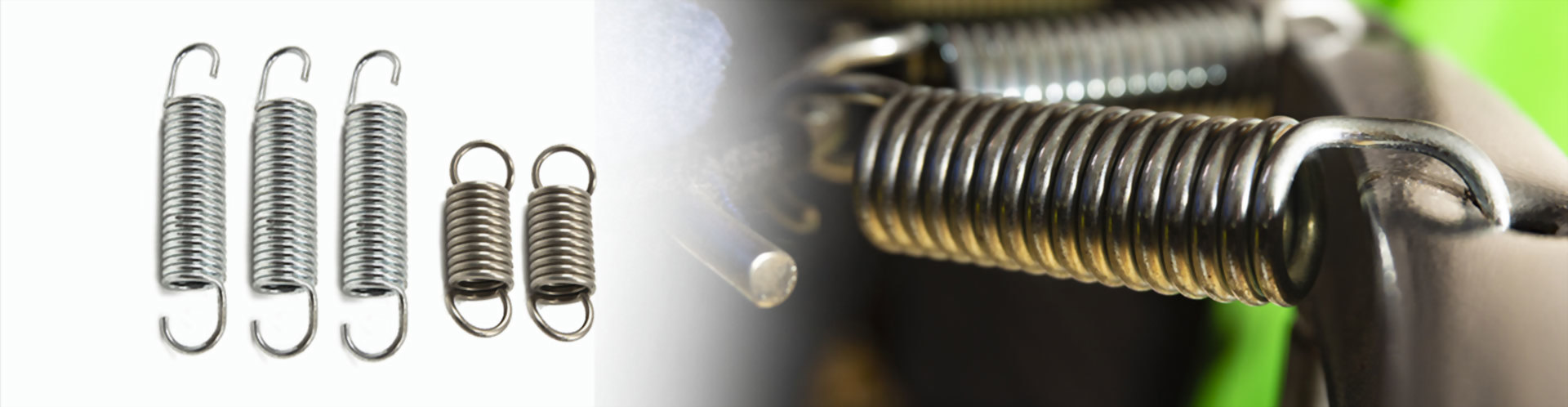


Spring Steel Wire Selection Guide
SW-B, SWP-B, SP-90 Differences Comparison and Comprehensive Spring Material Analysis
In the spring design and manufacturing process, many engineers often focus on the number of coils, wire diameter, free length, outer diameter, and heat treatment conditions. However, "material selection" is often the golden key that determines the final lifespan, reliability, and cost of a spring. Springs of the same size, using different grades of steel wire, can have fatigue lives that differ by several times. Especially in high-precision fields such as automotive parts, medical equipment, military products, industrial equipment, and electronic components, high-quality spring steel wire has become the core of product stability. This article will provide a comprehensive analysis of the most commonly used spring wires in the industry: hardened steel wire, piano wire, high-strength piano wire (SP-90), stainless steel spring wire, and alloy steel wire, assisting engineers and purchasing personnel in quickly identifying the most suitable spring material.
What is Spring Steel Wire? Core Characteristics and Application Areas
Spring steel wire is a high-strength steel that undergoes special processing (such as cold drawing) and strict heat treatment control. It possesses four core physical properties:
- High Elastic Limit: It can perfectly recover its original shape even after being subjected to enormous external forces.
- High Tensile Strength: It can withstand extremely high tensile, torsional, or compressive loads without breaking.
- High Fatigue Life: It can withstand millions of cycles of high-frequency repetitive motion.
- Good Formability: Suitable for high-speed, precision winding and mass production on automatic spring machines.
Five Key Industrial Applications of Spring Steel Wire
- Automotive Industry: Engine valve springs, suspension system springs.
- Electronics Industry: Contact springs, switch components, precision springs for mobile phones and laptops.
- Medical Equipment: Surgical instruments, guide wires, medical-grade miniature springs.
- Military and Aerospace: Weapon system firing pin springs, high-load control valve springs.
Industrial Equipment and Home Appliances: Automated machine tools, pumps, various switches. In-depth Analysis of Common Spring Steel Wire Types
1. Hard Drawn Steel Wire
- International Standard: JIS G3521
- Common Grades: SW-A, SW-B, SW-C
- Advantages: Highly competitive price, ample market supply, suitable for high-efficiency mass production.
- Disadvantages: Shorter fatigue life, material purity and tensile strength are significantly lower than piano wire.
- Applicable Products: Stationery springs, everyday hardware parts, general industrial tension or compression springs.
Comparison of SW-A, SW-B, and SW-C
The main differences among the three lie in their "carbon content" and "tensile strength." For example, with a wire diameter of 1.0 mm:
- Material Grade
- Characteristics
- Tensile Strength Range (MPa)
- Strength Improvement
SW-A
- Good formability, easy to process
- 1470~1720
- Base Standard
SW-B
- Increased strength, cost-effective
- 1720~1960
- Approximately 15% increase compared to SW-A
SW-C
- Highest strength hardened steel wire
- 1960~2210
- Approximately 30% or more increase compared to SW-A
2. Music Wire
International Standard: JIS G3522 Common Grades: SWP-A, SWP-B Music wire does not specifically refer to the wire used in manufacturing pianos, but rather gets its name from its initial application in high-tension piano strings. Due to its superior physical properties, it has now become a standard specification in the modern precision spring industry.
- High tensile strength: Approximately 15%~25% higher than ordinary hardened steel wire of the same diameter.
- High fatigue life: Fine microstructure, extremely suitable for high-cycle dynamic operating environments.
- Good machinability: Possesses excellent toughness, not easily broken during high-speed automatic forming.
What are the differences between SWP-A and SWP-B? Why is SWP-B the preferred choice for high-end springs?
SWP-A: Standard grade piano wire, suitable for general precision springs.
SWP-B: High-grade piano wire, currently the absolute mainstream in high-end precision industries.
Most spring failures (fractures) originate from fatigue damage, and up to 90% of fatigue cracks begin from surface scratches, decarburized layers, or internal micro-inclusions. SWP-B undergoes extremely strict control over these surface defects and steel purity during the manufacturing process, thus providing longer fatigue life and higher strength, making it the preferred choice for core automotive components, high-end electronic components, and precision machinery.
3. SP-90 High-Strength Piano Steel Wire (Next-Generation High-Performance Material)
In recent years, SP-90 has been the fastest-growing material in the high-end spring and electric vehicle (EV) markets.
SP-90 is a "high-strength, ultra-clean piano steel wire" specially developed by ROKKO METAL of Japan.
- Microalloying Technology: Chromium (Cr) is added, significantly improving the material's tensile strength, hardenability, toughness, and fatigue life.
- Top-Tier Wire Source: Utilizing high-grade special steel wire from Kobe Steel of Japan, it features extremely low decarburization, extremely low non-metallic inclusions, and extremely low segregation.
Using the same 1.0 mm wire diameter compression spring material as an example:
- Material Specifications
- Tensile Strength (MPa)
Application Scenarios
SWP-B (High-Grade Piano Wire)
- 2260~2450
- Precision industry, general high-quality springs
SP-90 (High-Strength Piano Wire)
- 2450~2700
- Lightweight, high-stress, extremely long-life design
When spring design is constrained by installation space and strict wire diameter limitations, yet must meet high load and long life requirements, SP-90 often provides a breakthrough optimal solution.
Five Core Considerations for Spring Design and Material Selection
When designing springs, engineers must evaluate the following five material mechanical properties:
Tensile Strength: Represents the maximum tensile force a material can withstand. Higher strength allows the spring to withstand greater stress and allows for the use of finer wire diameters for weight reduction.
Yield Strength: Determines the force required for a spring to undergo permanent deformation (elastic fatigue).
Fatigue Strength: Determines the cycle life of a spring under repetitive operation. Particularly important for automotive suspensions and dynamic industrial equipment.
- Toughness: Ensures the spring does not experience sudden brittle fracture under high loads.
- Surface Quality: As mentioned earlier, surface defects are a breeding ground for fatigue cracks; the value of high-quality wire lies in its "zero-defect" surface control.
Dynamic Spring Material Selection Guide (Recommended Based on Application Scenarios)
Unsure which material to choose? Here are quick material selection suggestions based on different product requirements:
- General Industrial Products / Hardware: SW-B recommended. Meets basic operational requirements while achieving the lowest material cost.
- Consumer Electronics / Precision Miniature Springs: SWP-B recommended. Excellent dimensional stability, suitable for automated high-speed assembly.
- Automotive Components / Suspension and Engine Peripherals: SWP-B or SP-90 recommended. Meets stringent requirements for high temperature and long cycle life.
- Military/Aerospace / High-Precision Control Systems: SP-90 is recommended. Meets extremely high reliability and zero-failure safety standards.
- Medical Equipment / Food Processing Machinery: SUS304-WPB (stainless steel spring wire) is recommended. Provides necessary corrosion resistance and biocompatibility.
- High-Temperature, High-Stress Environments (e.g., engine valves): Chrome Silicon (e.g., Si-Cr wire) or Chrome Vanadium steel is recommended, offering excellent anti-relaxation properties.
- The Hidden Key to Spring Life: Process Factors Beyond Materials
Many engineers mistakenly believe that "as long as you change to higher-grade materials, the spring won't break." In reality, materials are only the foundation; the following process and design details also determine the spring's final lifespan:
- Working Stress: The impact of stress on lifespan is exponential. A 10% increase in design stress can reduce the spring's fatigue life by more than 50%.
- Molding and Processing Quality: Precise control of wire diameter, coil diameter, and angle avoids localized stress concentration during winding.
- Stress Relieving Heat Treatment: After winding, appropriate low-temperature tempering is necessary to effectively eliminate residual processing stress.
- Shot Peening: High-speed shot bombardment of the spring surface introduces surface compressive stress, increasing fatigue life by 30% to 300%.
Surface Coating for Corrosion Protection: Depending on the environment, blackening, manganese phosphate coating, zinc phosphate coating, gold, silver, electroless nickel, chromium, tin, zinc, zinc-nickel alloy, hot-dip galvanizing, Dacromet, molybdenum disulfide, or electrophoretic coating are used to prevent premature fracture due to corrosion fatigue.
Future Development Trends of High-End Spring Materials
With the explosive growth in demand from electric vehicles (EVs), smart manufacturing, aerospace, and defense industries, the market requirements for spring steel wire are evolving in three main directions:
- Ultra-high strength: Moving towards materials such as SP-90 and high-grade chromium silicon steel, pursuing minimal space requirements and maximum elasticity.
- Ultra-high fatigue life: Utilizing "super clean steel" and vacuum melting technology to control internal inclusions to the micron level.
- High reliability traceability: Implementing zero-defect material management, with comprehensive quality data traceability from wire rod to finished product.
- Summary: Spring Material Positioning Overview
Material Grade
Industry Positioning
Core Advantages
SW-B
Standard Industrial Grade
High cost-effectiveness, wide market penetration
SWP-B
Precision Industrial Grade
Excellent comprehensive mechanical properties, standard for precision manufacturing
SP-90
High-end, long-life grade
High stress, fatigue resistance, preferred for lightweight design
Chromium Silicon Steel Wire
High Temperature, High Fatigue Grade
Excellent heat resistance and relaxation resistance
Stainless Steel Wire
Corrosion Resistant Grade
Rust-proof and corrosion-resistant, suitable for medical and humid environments
Frequently Asked Questions
Q1: What are the core differences between SWP-B and SP-90? How to choose?
A: The most crucial difference lies in tensile strength and chemical composition. SP-90 is a next-generation high-strength piano wire, specially fortified with chromium (Cr). Its tensile strength (for example, 1.0 mm) is approximately 10% higher than traditional SWP-B (up to 2700 MPa). If your spring installation space is limited, but you require higher loads or longer fatigue life (such as precision automotive valves or military components), upgrading to SP-90 is recommended; for general precision electronics and routine industrial applications, SWP-B provides excellent performance.
Q2: Why do compression springs shorten over time? How can I prevent spring fatigue?
A: Spring shortening or a decrease in elasticity is called "relaxation" or elastic fatigue in engineering. The main cause is that the working stress exceeds the material's yield strength or it is subjected to prolonged high-temperature stress environments. To avoid this problem, you should first reduce the design stress or select a material with higher yield strength (such as upgrading from SW-B to SWP-B, or using chromium silicon steel, which has excellent resistance to high-temperature relaxation). In addition, post-forming stress-relief heat treatment (tempering) and shot peening are essential processes to significantly improve fatigue resistance.
Q3: Which spring steel wire has the longest fatigue life?
A: Among conventional carbon spring steel wires, SP-90 high-strength piano wire and SWP-B piano wire, which undergoes ultra-clean special melting, have the best fatigue life. In high-temperature dynamic environments, chromium silicon steel wire (such as SAE 9254 / JIS G3560) with advanced shot peening process exhibits the most outstanding fatigue life performance. When selecting the material with the longest lifespan, both "steel purity (few inclusions)" and "no surface defects" must be considered.