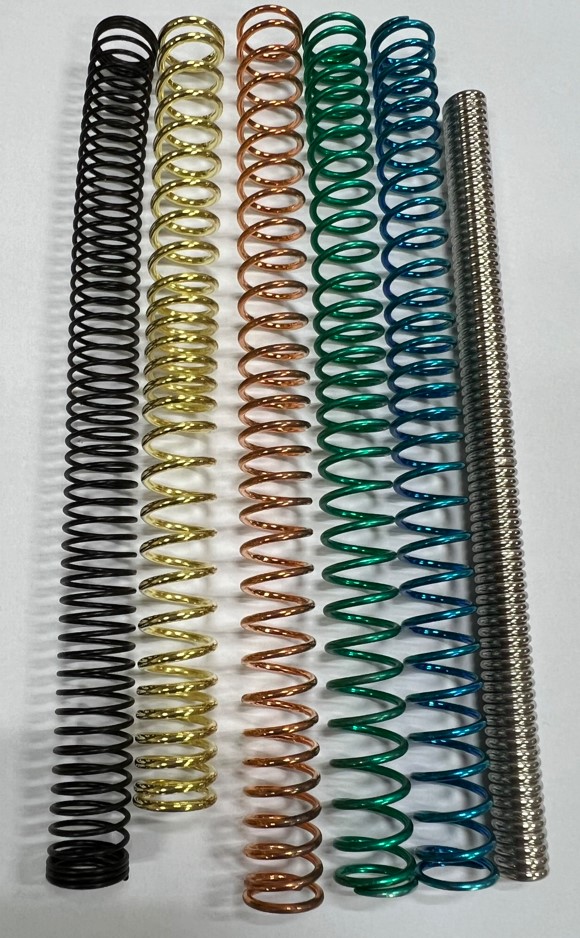
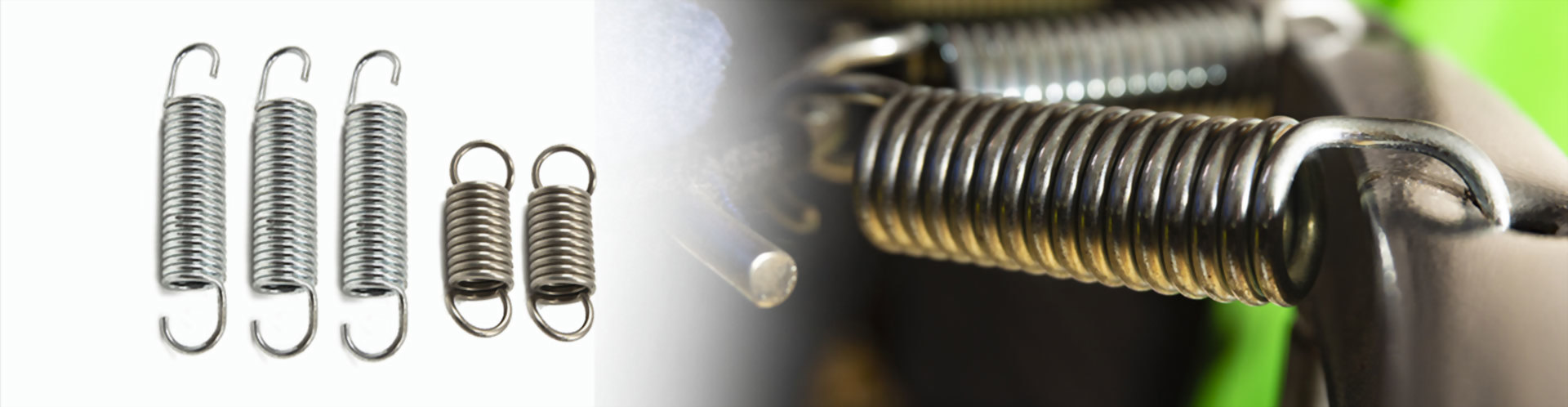


The surface treatment techniques of spring are diverse
The surface treatment techniques of spring are diverse. Each method has its unique advantages and disadvantages
Here are some common spring surface treatment methods and advantages and disadvantages:
1. Galvanized (Galvanizing)
advantage:
Anti -corrosion: Alier -galvanized layer effectively prevent springs from rusting in a humid environment.
Durable: It can extend the life of the spring.
The cost is relatively low: among the many surface treatment methods, the cost of galvanizing is low.
shortcoming:
Appearance problem: The color and texture of galvanized layer may not meet the aesthetic requirements of some applications.
Thickness limit: Excessive thickness of the galvanized layer may affect the performance of the spring.
2. Nickel Plating
advantage:
Excellent corrosion performance: Nickel layer has good antioxidant and corrosion resistance.
Beauty: Sub -surface and shiny, suitable for applications that need high appearance quality.
Wear resistance: can improve the wear resistance of spring.
shortcoming:
High cost: Nickel plating process is relatively expensive.
Complex processing process: require professional equipment and technology.
3. Chromium plating
advantage:
Highly corrosion resistance: Chromium layer can effectively prevent rust and oxidation.
High hardness: can significantly improve the surface hardness and wear resistance of the spring.
Beauty: The chromium layer is bright and beautiful, suitable for high decorative needs.
shortcoming:
High cost: Chrome -plated process is high.
Environmental problems: The chrome -plated process has a greater impact on the environment, and it is necessary to comply with environmental protection regulations.
4. Phosphorus (Phosphating)
advantage:
Corruption: The phosphorurative layer can provide basic anti -corrosion protection.
Low cost: Phosphorusterization is relatively cheap.
Enhanced adhesion: It can enhance the adhesion of subsequent coating.
shortcoming:
Limited corrosion resistance: When used alone, the antifroculation performance of the phosphorurative layer is not as good as other treatment methods.
Poor beauty: The appearance of the phosphorurative layer is darker, suitable for occasions that do not require high appearance quality.
5. Paining
advantage:
Corruption: It can provide good anti -corrosion protection.
Diverse appearance: Choose a variety of colors and gloss to meet different appearance needs.
Moderate cost: Compared with other methods, the cost of paint is moderate.
shortcoming:
Dordrop resistance is general: paint layer is vulnerable to mechanical damage.
High construction requirements: Professional equipment and technology are required, and the construction environment requirements are strict.
6. Black oxide
advantage:
Corruption: It can provide certain anti -corrosion protection.
Beautiful: The surface is black and has a good decorative effect.
Low cost: The cost of processing is low.
shortcoming:
The corrosion resistance is generally: protection performance is not as good as galvanized or nickel -plating.
Normal abrasion resistance: black oxidation layer is thin and limited abrasion resistance.
7. Electrophoretic Coating
advantage:
Corruption: It can provide uniform and dense coating, which has excellent corrosion performance.
Wear resistance: can improve the wear resistance of spring.
Environmental protection: more environmentally friendly treatment methods.
shortcoming:
High cost: higher treatment costs.
High equipment requirements: require professional electro -swimming coating equipment.
Each surface treatment method has its own specific application occasions. Choosing the appropriate treatment method requires
determination according to the spring's use environment, performance requirements, and cost considerations.